


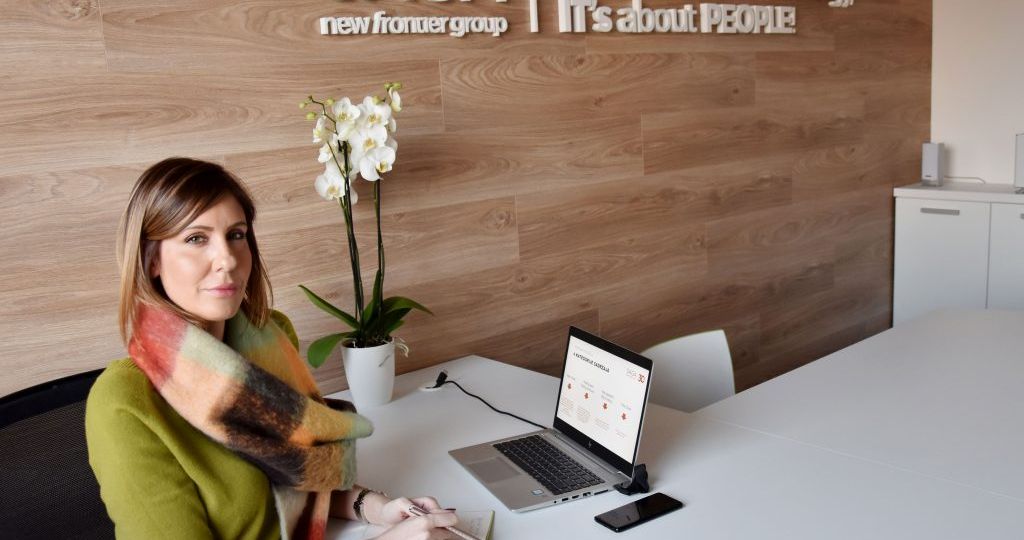
We bring you the interview of Larisa Zdravkovic, Director of Corporate Affairs and Communications at Saga, for Blic. The text is completely downloaded from the Blic portal
Blog
When we think of IT professionals today, the first thing that comes to our mind is a programmer. In the general public, this occupation is associated with above-average incomes, and in economies of many countries, with high demand and lack of staff.

After more than three decades of business in the marketplace of integrator systems, successfully achieving the leadership position in the last ten years is a great success for Saga, but also a great responsibility – to maintain a leading position, reputation, competitiveness and innovation.

Around 20 years ago, during my college days I used to drink beer and discuss with fellow students. Through those discussions, we would gather new knowledge in different spheres of life, from history of art and architecture to politics and economics. Friend of ours told us once about the lesson he studied at the University – industrial development of Japan in second half of the 20th century.

“Blue Ocean Strategy” is explained in the book by W. Chan Kim and Renee Mauborgne in 2005. It describes how to reach new clients, expand the existing customer base and increase sales without having to compete with the competition.

Whenever some new technological advancement is mentioned in a conversation, we usually come to one universal conclusion: the World, whatever in that moment we consider it to be, reached the level that we as a country are yet to reach. The differences are generally big and very obvious.

Lately, there is more and more information in the media about large amounts of electricity spent on the so-called mining of Bitcoin and other cryptocurrencies.

When it comes to business implementations, there is no serious company that does not have its own applications. Weather they are developed in that company or are licensed, it does not matter.

I have always been amused by the scene from the film “Balkan Spy” when Bata Stojković is yelling into the phone: “Yeeees, a switchboard can make a mistake once, but not hundred times. Listen pal, you might’ve gotten the wrong number, but you got the one you were looking for.

Everyone is talking about Industry 4.0, but no one is considering that a consumer has changed and continues to change constantly. Therefore, it is necessary to change the industry looking at a revolution led by the Customer 4.0.